
Kansas Wanted List Layers
Kansas splits wanted notices across a few official layers. Each layer does a different job. The Kansas Bureau of Investigation (KBI) posts selected wanted people. It also points readers toward the responsible agency or listed charges. The Kansas Department of Corrections (KDOC) keeps separate public pages for parole and community-corrections absconders. Federal fugitive work belongs to the U.S. Marshals Service (USMS), which runs national lists plus district information. County and city agencies publish local notices as well. These sources never merge into one complete list. A local warrant can be missing from every state and federal notice. A shared name can also belong to more than one person. Compare the case details on the responsible agency's current page. Write down the date you checked. Live status shifts over time.
| Official source | What it covers | Photo or notice detail |
|---|---|---|
| KBI Most Wanted | Selected state wanted notices | Entry may identify a person, agency, or charges; the KBI supplies a tip number. |
| KASPER parole absconders | People listed as absconding from parole supervision | Search controls can offer photo and location filters. |
| KASPER community-corrections absconders | A separate supervision list | Use the displayed status and date; do not treat it as a county booking roster. |
| USMS District of Kansas | Federal district offices, fugitive contacts, and task-force context | Provides the district contact route, not a complete Kansas warrant index. |
| USMS 15 Most Wanted | Selected national federal fugitives | The agency warns that listed people may be armed and dangerous. |
Kansas KBI Wanted Notices
The KBI Most Wanted page is the statewide starting point for selected notices. It names the person sought and often lists the responsible agency or charges. It is not a roster of everyone with an active Kansas warrant. Absence from that page does not mean a warrant does not exist. A matching name is not proof of identity either. Tips go to 1-800-KS-CRIME, also written as 1-800-572-7463. The KBI suspicious-activity page takes online reports, but staff do not monitor it around the clock. A crime in progress calls for 911. A web form is never an emergency channel. Follow any separate tip instructions printed on a notice. Leave any KBI photo on its official source page. Notices can go stale, so confirm with the named agency and send tips through its route. Reposting personal details or pursuing someone yourself helps no one.
| Notice detail | What the official source says | How to read it |
|---|---|---|
| Person and photograph | The KBI page presents selected wanted people; images remain on the agency page. | Confirm identity with the responsible agency, not a face or name alone. |
| Responsible agency | The notice may identify the agency seeking information. | Use that agency’s current contact route when the notice gives one. |
| Charge or case wording | The source may state charges or a short case description. | These are charges or notice language, not a conviction. |
| Tip path | The KBI gives 1-800-KS-CRIME for crime tips. | Use 911 for an immediate threat; the online form is not monitored 24/7. |
Kansas KDOC Absconder Lists
KASPER is KDOC's corrections and supervision system. Its parole and community-corrections absconder pages are narrower than a general wanted list. They cover people whose supervision status is shown as absconding. That is not the same as everyone recently arrested or every county warrant name. Someone can live under state supervision without being in prison, so the displayed status matters. The parole absconder search lets you pick a location. You can leave the field blank to see all locations. The control page offers Show Photos and thumbnail choices. The location shown refers to the last known supervision spot. It may be one of 105 Kansas counties, a Kansas facility, a federal location, or another state. Treat that filter as a clue. It is not a verified current address. The community-corrections list is a separate path. Read the displayed status and the site's disclaimer before leaning on either result. KDOC warns that information can change. No one should be arrested based on the website alone. Never approach, follow, or detain anyone. Send tips to law enforcement or to the agency contact KDOC names. The official KASPER parole page shows the location and photo controls on its own site.
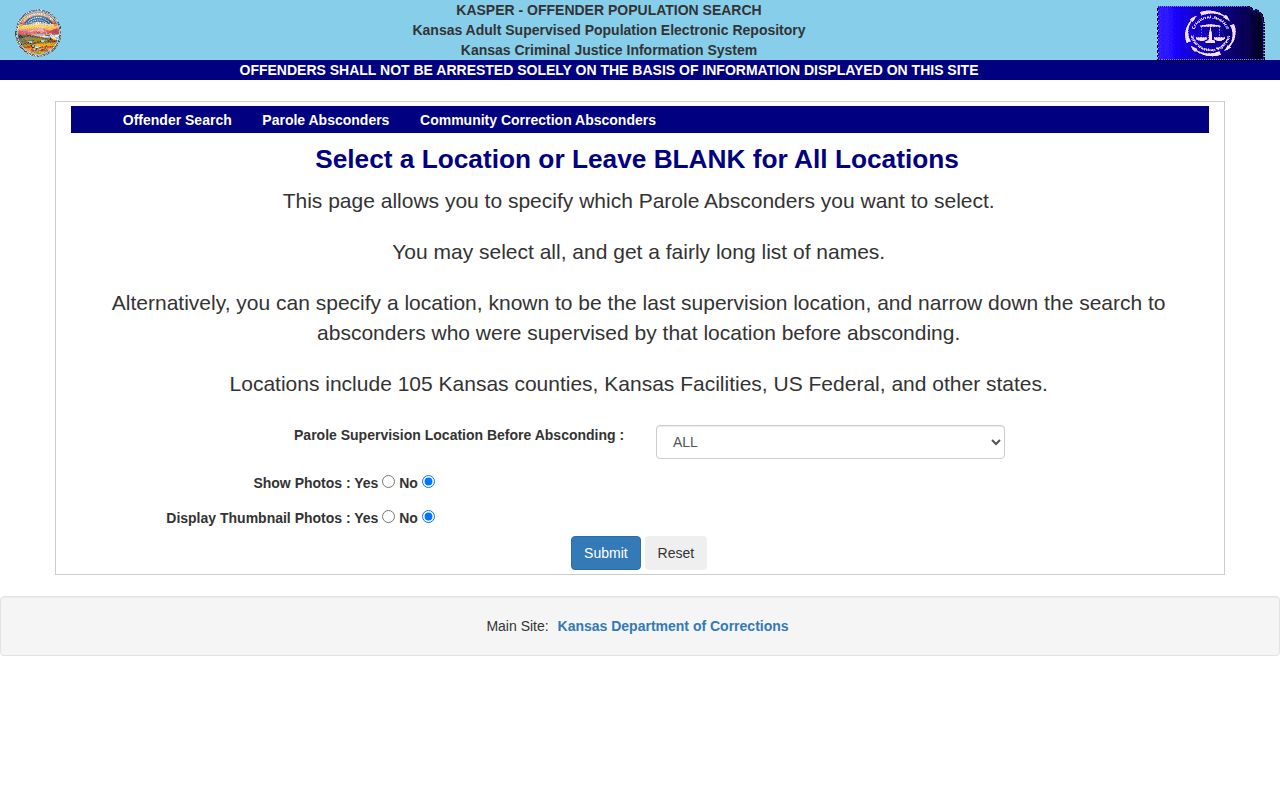
The KASPER page displays search options rather than individual results. Its filter narrows the list by reported supervision location; it does not tell you where anyone is now.
Kansas USMS Fugitive Leads
The USMS District of Kansas page describes the federal district, task-force ties, office contacts, and fugitive-investigation routes in Kansas City, Topeka, and Wichita. It helps you find the right federal office. It is not a county warrant search. Not every state fugitive notice becomes a federal case. State and federal agencies may share one case, yet their notices can differ in purpose and timing. The national USMS 15 Most Wanted page is a selective list, not a directory of all federal warrants. Its notices warn that listed people may be armed and dangerous. The USMS tip line is 1-877-WANTED2, or 1-877-926-8332. That number is not for emergencies. An immediate threat still calls for 911. Follow the exact instructions on the current official notice and report what you know without approaching anyone. The District of Kansas page lists its contacts and district information, which helps identify the proper federal office.
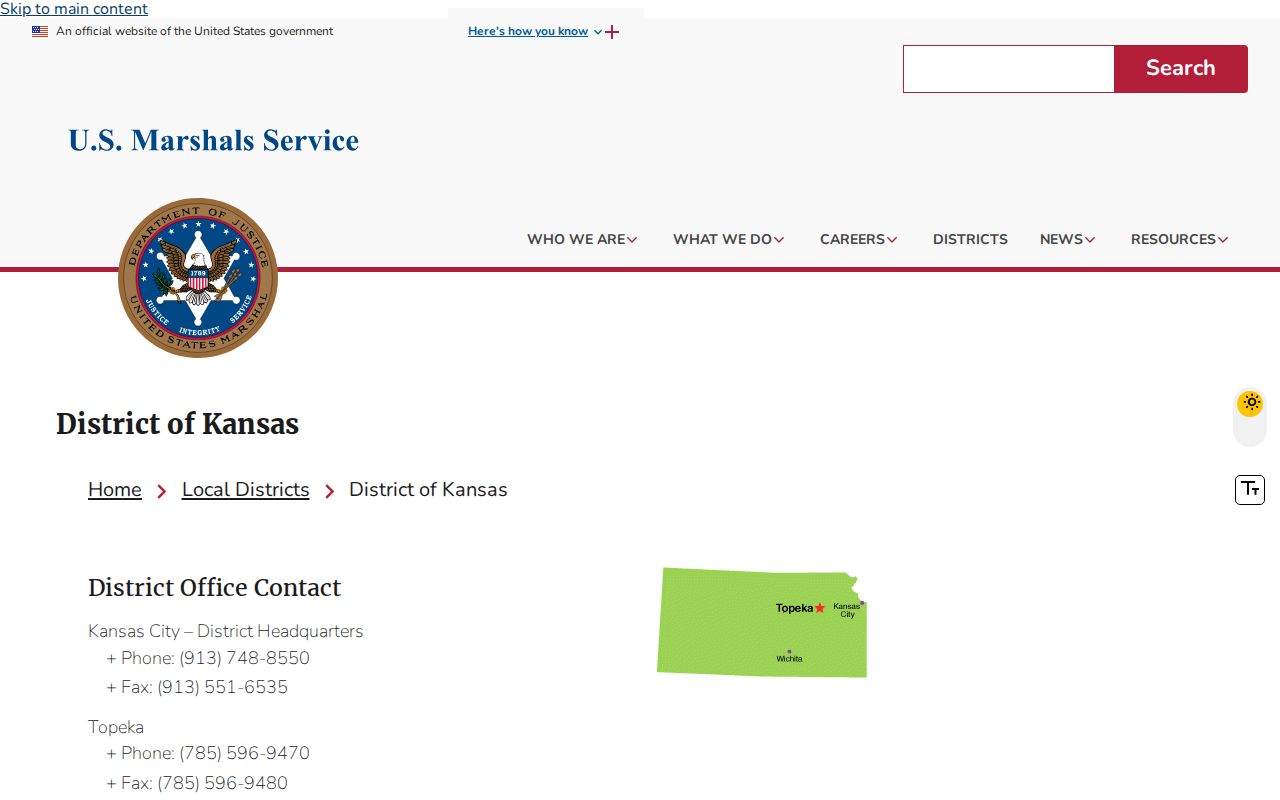
This official contact page carries no wanted-person gallery. It works as a routing source for federal matters, while the national list supplies its own selection and warning language.
Kansas County Wanted Pages
Kansas wanted notices live at the county level, since sheriff and police departments post their own. For a broader sweep, the state Attorney General's law-enforcement alerts hub gathers links to select state, county, and federal systems, with entries covering Johnson, Sedgwick, and Shawnee counties. Treat it as a starting point. No central Kansas warrant database sits behind it.
When your question is local, begin with the county or city connected to the case. The Kansas County Directory maps out local record pages and flags which sheriff, jail, or court handles each. Remember that these record types differ. A jail roster shows current custody, so it can miss someone already released, while a wanted notice can stay online long after a status changes. Check what a page actually covers before trusting it.
What if the local page shows no notice? Call the issuing agency or court. An old screenshot or an unofficial repost can never confirm whether a warrant stands today.
Safe Kansas Tip Routes
Go through the agency that issued the notice. The KBI runs a statewide tip number plus an online report form, USMS keeps a federal fugitive line, and KDOC sends absconder tips to law enforcement or its Enforcement Apprehensions and Investigations Unit. One office will not always forward your report to another.
Know each line's limits. The KBI cautions that its online reports are not monitored around the clock, and USMS notes its tip line is not for emergencies. Someone facing immediate risk? Call 911. Share only what you saw, and let officers decide on contact, stops, or arrests.
- Open the current notice and confirm which agency issued it and which tip route it names.
- Call the agency number or use its official report form. Share the notice details and the source date, if known.
- Describe what you personally observed. Do not follow the person, approach a home, or post a location online.
- Use 911 for an immediate threat or crime in progress; do not wait for an online form to be read.
Official tip contacts
KBI crime tips: 1-800-572-7463 (1-800-KS-CRIME). KDOC Enforcement Apprehensions and Investigations Unit: 785-414-7755. USMS fugitive tips: 1-877-926-8332 (1-877-WANTED2). Immediate threat: Call 911.
The KBI suspicious-activity page explains its reporting limits and emergency route.
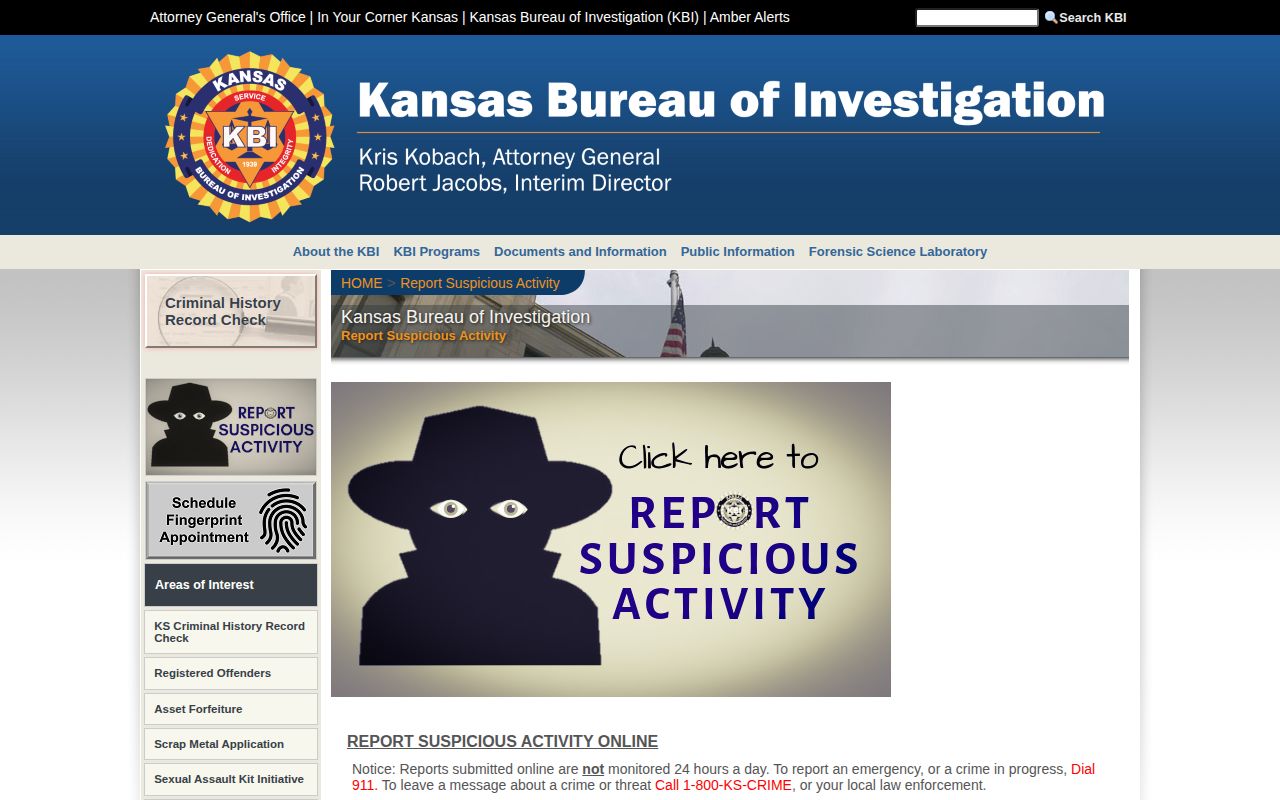
That difference matters most late at night. A submitted web form sits unread until staff return, so it never substitutes for a call when a person faces danger right now.
Checking a Kansas Warrant
Wanted lists are selective by design. No page can confirm every active county warrant. Kansas offers no single verified statewide index. A name missing from a KBI or USMS page proves nothing locally. An old roster is just as weak. It cannot reveal whether a warrant was recalled.
For case-level digging, the Kansas Judicial Branch's District Court Records page opens public case access. A docket may surface a case number or a future court date. It is not, however, a booking-photo source or a guaranteed live warrant check. Some files never reach the web, and sealed or protected cases carry restrictions. Whenever online answers run dry, ask the clerk. The agency tied to the case gives the real confirmation.
Work a careful check in this order:
- Identify the county, court, or agency named in the notice, case paper, or other official record. A name alone may not be enough to tell two people apart.
- Search the Kansas court portal for a case record, then read the latest available docket entry. Treat that as case context, not final confirmation that a warrant remains active.
- Contact the issuing court clerk or law-enforcement agency through its official website. Give the case number if available and ask what office can verify current status.
- If the question concerns your own case, consult a Kansas attorney or the court about the lawful way to address it. Do not rely on a third-party site or attempt to avoid contact with authorities.
Warrants get recalled and revised, and dockets lag behind real events. Note the source and its date with any result you save. For questions about a local booking or custody entry, the statewide booking-record overview points to the right local, court, or corrections office without treating a wanted list as the whole story.
| Source | Useful for | Limit to keep in mind |
|---|---|---|
| Issuing court clerk | Confirming which case office can address a court warrant | Public access and record detail can vary by case. |
| Responsible sheriff or police agency | Asking about a notice or agency-held warrant record | Use the office named on the official notice. |
| Kansas court portal | Finding case numbers and docket events | A docket is not a complete arrest or active-warrant database. |
| KBI, KDOC, or USMS list | Checking a specific agency’s published notice | Each list is selective and has its own scope. |
Federal Custody Is Different
Federal custody works on a separate track from any wanted list. The Bureau of Prisons runs an inmate locator covering federal inmates incarcerated from 1982 to the present. Search it by name. Search it by register number. What you get back are identity and custody fields, not photos, and nothing about who the USMS is hunting. The BOP inmate locator opens with name and register-number search options rather than a gallery of faces. Gaps exist, too. Someone sitting in a county jail during federal proceedings may never show up in BOP at all. A person marked released could still be held elsewhere or remain under supervision, so this tool tells you nothing about whether a county warrant exists.
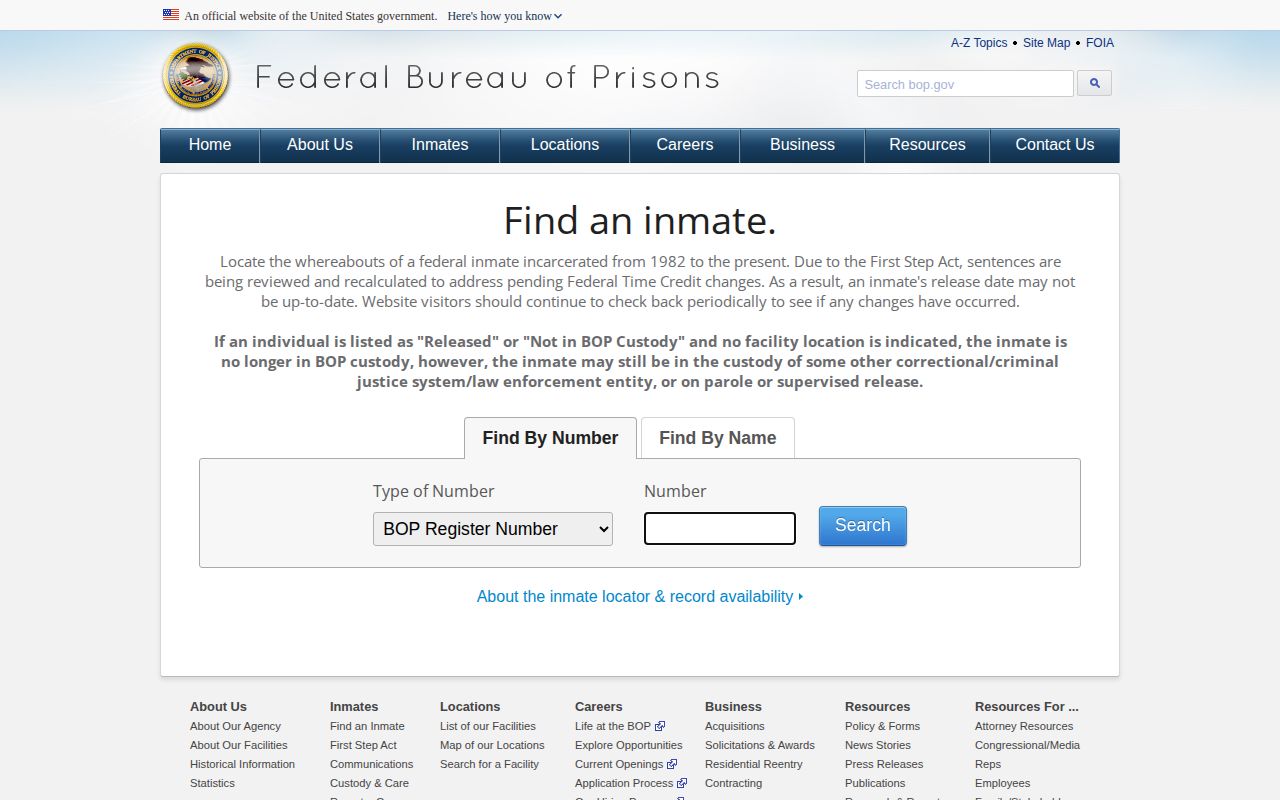
Use it for one purpose: verifying a federal custody record. If status stays murky, contact the responsible federal office. The locator never replaces the KBI, KDOC, court, or county paths described above.