
When Kansas Booking Photos Are Public
Kansas starts from openness. KORA opens records unless an exception applies. That presumption has edges. The Attorney General's guidance treats jail rosters and police blotters as generally open, while a mugshot or standard arrest report may land inside the criminal-investigation exception instead. Custodians get room to weigh the facts. One may release a photo, redact parts, or withhold it entirely. So access varies by record and agency. Kansas also lacks a single public system for searching every county's current bookings and photos. Some sheriffs publish photo-bearing rosters. Other counties rely on text reports, short-term feeds, or records-request channels. That patchwork reflects agency practice and technical setup as much as legal limits. A name on a roster does not oblige anyone to post the picture online. One item's status never settles another's.
Kansas KORA Record Exceptions
Chapter 45 of the Kansas statutes builds the framework. K.S.A. 45-216 declares the open-records policy. Other sections define what counts as a record, set request and copy procedures, and list exceptions. The key one here is K.S.A. 45-221(a)(10), covering criminal-investigation records. Its factors include public interest, interference with an investigation, exposure of a confidential source or method, danger to a person, and identification of a sex-crime victim. Nothing there makes all arrest material secret. Nothing forces release of every booking photo either. When a record mixes open and exempt parts, KORA calls for separation or redaction where practicable. K.S.A. 45-221 supplies the exception framework that custodians apply.
The Attorney General's KORA FAQ sets a response clock. A custodian generally must respond within three business days or explain when a reply is coming. That deadline is not a delivery promise. A request seeks an existing record, nothing more. KORA does not make staff build a new database, compile a custom list, or answer a broad research question. Costs may apply for copies and staff time.
Kansas courts keep stressing context. In Seck v. City of Overland Park, the Court of Appeals weighed the investigation exception and the risk of exposing information about innocent people. Wichita Eagle & Beacon Publishing Co. v. Simmons applied KORA's separation rule to correctional records. Telegram Publishing Co. v. KDOT dealt with records fees and access disputes. These rulings shape how custodians handle requests. None of them creates a statewide mugshot feed.
Note: Kansas lists no mugshot-specific anti-pay-to-remove statute in Chapter 45, so check the legislature's current inventory before relying on that.
Better requests get better answers. Name the record itself. Instead of asking an office to hunt one person through every system, request an existing booking photo, booking sheet, or arrest report. Target the agency that made the arrest or ran the jail. Give the person's name plus a date or case identifier when you can. Custodians may want the request in writing. They may ask for clarification if it is too broad. Inspection first is allowed. Looking before ordering copies helps you find the right file and cut costs.
Withholding is not always the end. Ask whether non-exempt portions can be separated out. A denial should identify the legal basis and the agency's review route. A late response should say when the agency expects to act. KORA is not a disclosure guarantee. Still, a narrow request clarifies the custodian's job and leaves both sides a clean account of what was asked.
Official Kansas Record Paths
No photo on the roster? Start with the office that holds the record. The County Directory routes you by county because booking files live at the local level. A court docket shows the filed case and its later events. A corrections search covers people sentenced to state custody. Each system answers a different question, so one result never substitutes for another.
- Check the sheriff or jail roster for current custody and any photo the county elects to publish.
- Ask the arresting or holding agency for an existing booking record or image under its KORA procedure. Identify the person, approximate date, and record sought.
- Use the Kansas Judicial Branch’s district-court records page to learn whether a case is available online or requires a courthouse public terminal.
- For a person sentenced to state custody, search the KDOC offender records. It is a corrections lookup, not a county booking roster.
The County Directory maps out each local jurisdiction. Some counties pull a person from the roster after release, yet the booking file still sits in agency hands. Courts can hold a case file with no photo attached at all. For one specific record, go straight to the custodian who made it.
Kansas Juvenile Record Limits
Kansas treats juvenile files as their own world. K.S.A. 38-2309 governs the official juvenile file and limits who may see it, including a best-interest condition for some records involving a child under fourteen. K.S.A. 38-2310 covers law-enforcement records separately. Victim identifiers and social-file material carry added limits. An adult-looking image on an unofficial page says nothing about a person's age at arrest, and a vendor's search result says nothing about lawful access.
Before publishing or circulating a juvenile identity or photo, a custodian and a publisher both need to confirm the legal basis. The safe route runs through the responsible agency or court. The statutes also allow a petition for juvenile expungement, with exclusions and conditions attached. Skip sensitive details you do not need.
Read the current official-file statute and the separate law-enforcement-record statute before judging any specific item.
Kansas Booking Photos and Dispositions
A booking record starts with an arrest. What happens afterward varies widely. A prosecutor may decline the charge, or the case may be dismissed, diverted, or resolved at trial. The image does not follow that timeline. It can sit online long after a court case changes course, and a roster can vanish while the underlying agency file remains on hand.
| Record status | What it means | What to check next |
|---|---|---|
| Booked | An agency recorded an intake after arrest. | Confirm the current custody status with the holding agency. |
| Charged | A prosecutor or charging document states an charge. | Read the court docket for later filings and rulings. |
| Dismissed or acquitted | The case did not end in a conviction on that charge. | Check the final docket entry and any later appeal. |
| Convicted | A court entered a judgment of guilt. | Check the judgment and any appeal or sentence change. |
| Expunged | A court order limits disclosure of covered records. | Review the order and notify each custodian holding a copy. |
Kansas courts have weighed booking photos directly. In State v. Vazquez, the Court of Appeals examined when such an image works as evidence, weighing timing, relevance, and prejudice. That question concerns trials, not public access. A photo used in court or a news story obligates no other agency to release its own copy.
Kansas Expungement and Record Disclosure
Adult expungement runs through K.S.A. 21-6614. Eligible convictions and diversions can be petitioned to the convicting court. Waiting periods, exclusions, and eligibility all turn on the offense and the facts. No fixed span wipes every record. Check the current statute and court forms before filing. After an order, the covered custodian's disclosure duties shift, though a separate publisher may still hold a copy and need notice.
K.S.A. 22-2410 offers a second path for arrest records. It fits cases with different outcomes. Mistaken identity and identity misuse get special rules there. Once the order lands, disclosure of covered arrest, incarceration, or court information is restricted, subject to the law's exceptions. A photo's fate depends on the order's scope. The order is strong grounds for asking agencies and republishers to correct or suppress an item. It does not erase every independent copy online.
Juvenile expungement follows K.S.A. 38-2312, with its own rules. Its eligibility and exclusions differ from the adult paths. A 2026 automatic-expungement bill, SB 187, died in the Legislature. Treat it as unenacted. Never apply an adult rule to a juvenile file.
Three routes, three statutes: check the current text and the actual order, since an order's reach depends on the record and the case outcome.
Kansas Mugshot Publisher Correction Policies
Fixing a government file and fixing a published story are two different jobs. Start with the agency. Confirm the person, the case number, and how the case ended. A court order that seals or restricts a record goes to the office holding that file. After that, contact each publisher. Give the exact page address plus copies of your paperwork. Keep a record of what you sent.
Some publishers run free removal paths built on documentation. RecentlyBooked's policy accepts requests tied to dismissed, expunged, sealed, incorrect, outdated, juvenile, or duplicate records. Accurate current bookings may not qualify. Mugshots.com's record-maintenance policy lists its own qualifying categories and asks for supporting records. Both are voluntary. Neither is a Kansas statute. Neither guarantees removal. KSHB took a different route in its newsroom. Its mugshot policy curtails the use of police photos and opens a public appeal route for existing coverage.
Busted Newspaper's free listing request asks for identifying details, the exact page URL, a reason, and proof. Proof might be an expungement, a dismissal, a not-guilty finding, or a sealing order. The site verifies each request. That can take several days. It remains a publisher path for qualifying records, not a legal right in Kansas.
Arrests.org and Mugshots.zone list no plainly stated free correction policy for their Kansas sections. That leaves standard contact as the route. Save the exact URL. Submit a documented correction through the publisher's current official channel when a record is wrong or a court order applies.
Be wary of paid removal promises. No private service can rewrite a court docket or the original agency file. A payment will not erase a government record, and no service can guarantee that every copy disappears. Kansas has no mugshot-specific anti-removal law on the books. Each publisher's own stated policy governs its free process, so keep your request factual.
What if a photo stays up after a case ends? First match the photo to the right person. Then get the final court entry or order. Make separate documented requests to the agency and to the publisher. Keep one distinction straight: a dismissal and an expungement are different legal events.
Kansas open-records law lives in the Legislature's KORA chapter.
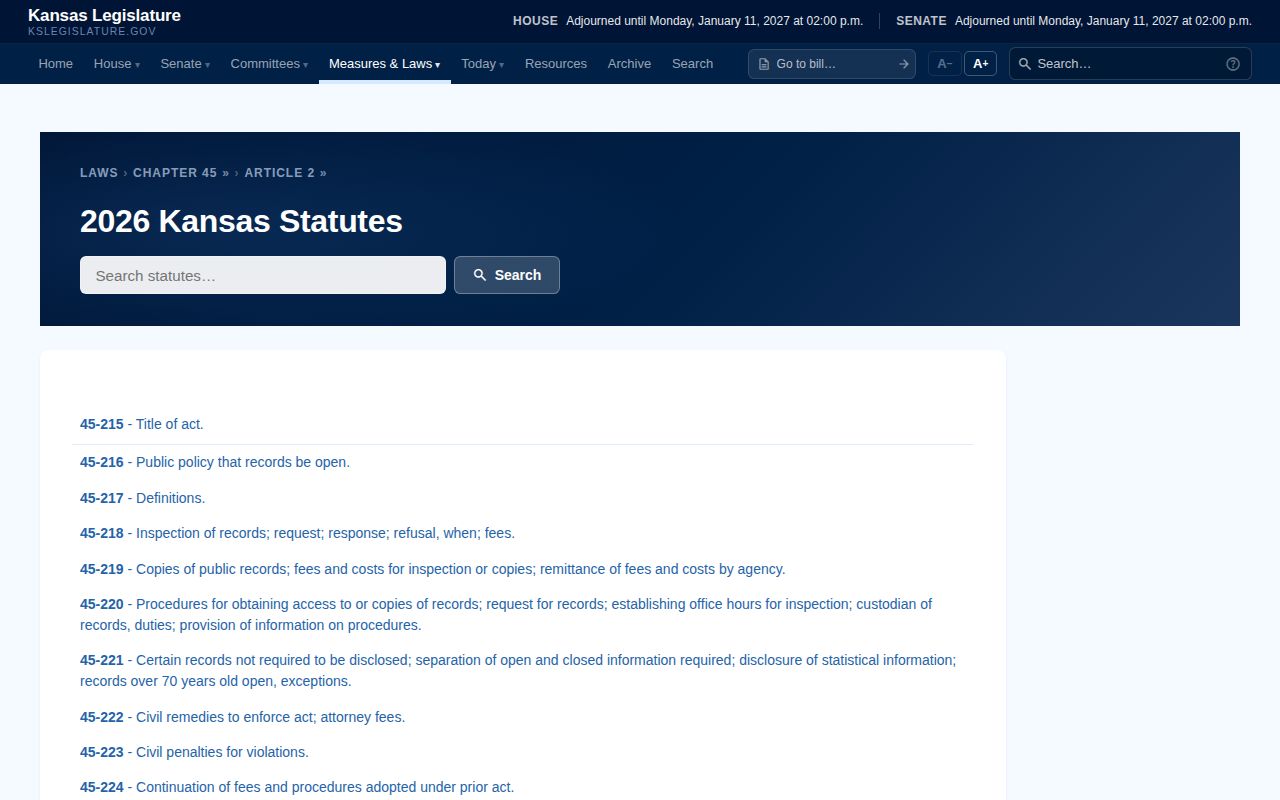
The statutory text supports a record-by-record answer. It creates no universal photo feed and requires no web roster for every agency.
The Kansas arrest-record expungement section sets a distinct petition path for eligible arrests.
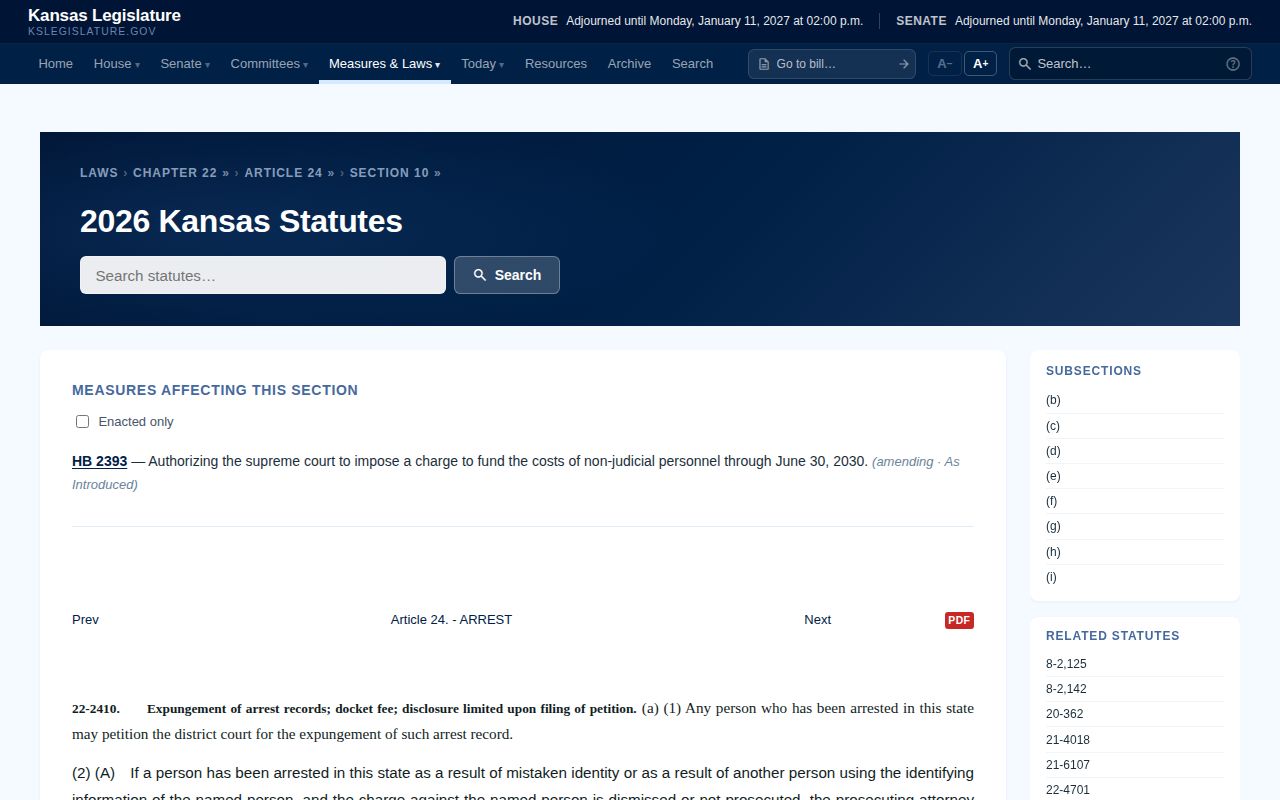
The statute's post-order limits cover only listed records. Read the order and the law itself for the exact scope and exceptions.
The adult expungement statute lists offense-specific eligibility rules and exclusions.
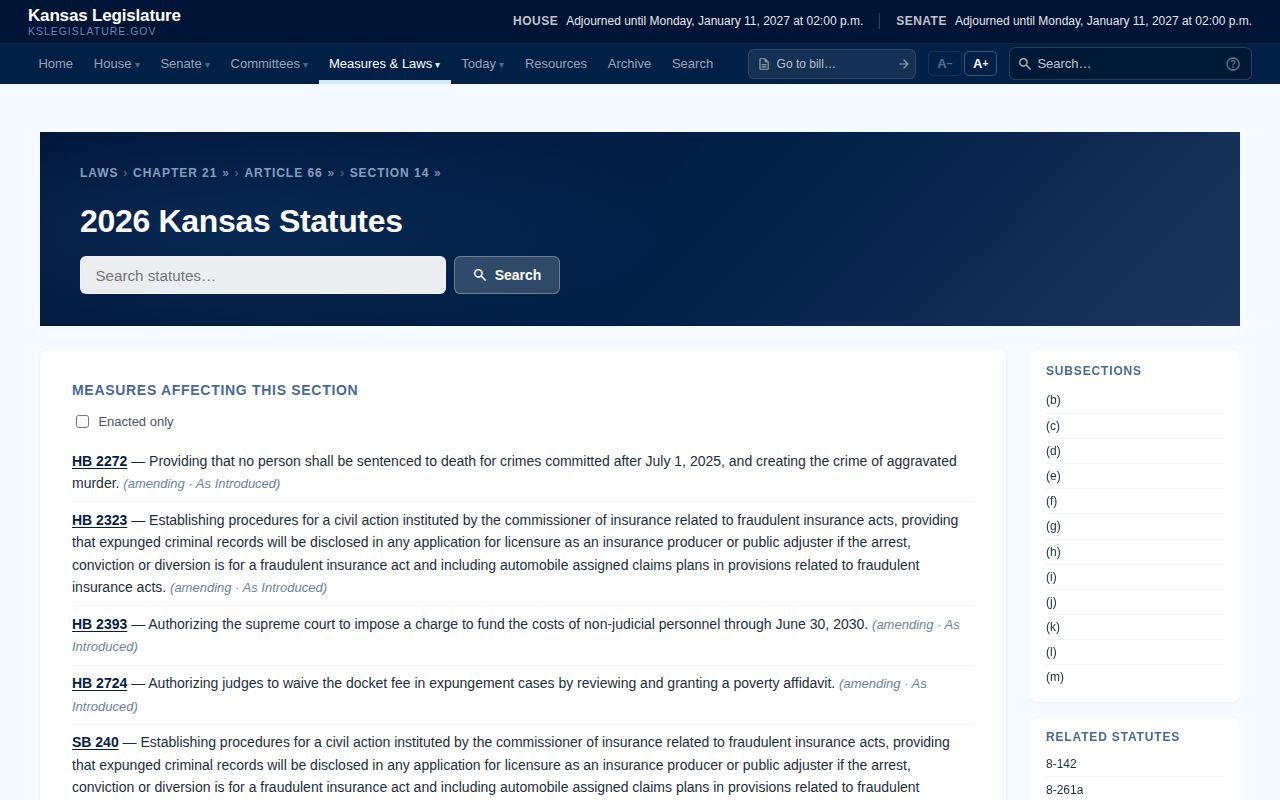
Skip any single statewide waiting period. Check the current statutory text and the court forms for the specific case instead.
The juvenile official-file statute makes clear that youth records have separate boundaries.
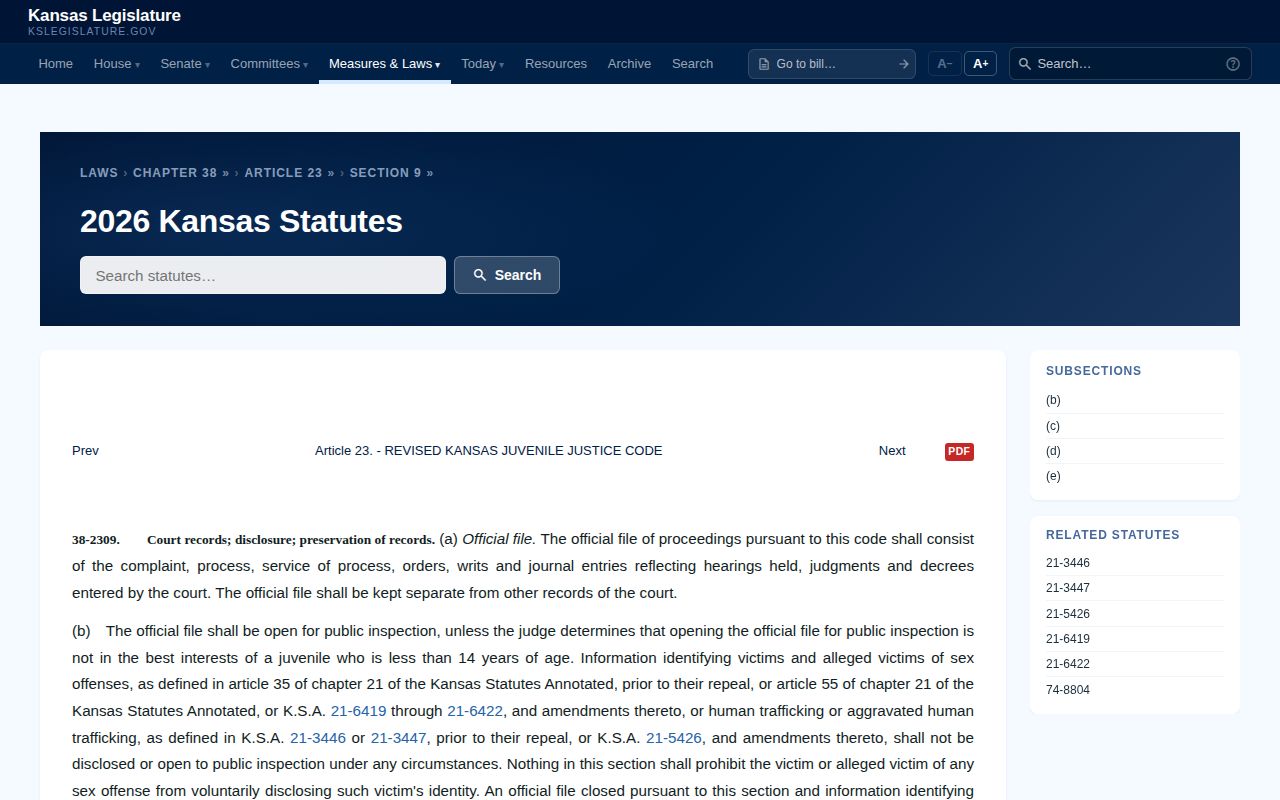
Juvenile images deserve extra caution. No unverified third-party result is permission to republish one.