
Kansas Arrest Cases and Records
Fame usually starts with the arrest itself. Then come the charging documents, the district-court judgment, and any appeal. Later state or federal custody records may follow. A booking image is just one link in that chain. News outlets copy it freely. The original agency file can vanish from the web while the copies live on. That is why every case below points to where the authoritative records live. Outcomes change, so a docket beats an old headline. No booking photo appears here.
Notable Kansas Cases by Record
The table covers each case, its documented legal outcome, and the best place to start a record search. Some entries carry a gap. News reports show a booking image, but the original agency file is not accessible. The gap gets stated plainly rather than filled with a syndicated copy.
| Case | Year | Documented outcome | Record trail |
|---|---|---|---|
| Dennis Rader | 2005 | Pleaded guilty; ten consecutive life sentences. | Sedgwick County detention and court files; Kansas Supreme Court; later KDOC record. |
| Jonathan and Reginald Carr | 2000 | Convicted in Sedgwick County and sentenced to death; appellate proceedings followed. | Sedgwick County District Court and Kansas appellate opinions. |
| Scott Roeder | 2009 | Convicted; appellate court upheld conviction and remanded the Hard 50 sentence for resentencing. | Sedgwick County District Court, DA case release, and appellate docket. |
| Adam Purinton | 2017 | Pleaded guilty in state court and received a life sentence; separate federal charges were announced. | Johnson County District Court and U.S. District Court of Kansas. |
| John Edward Robinson | 2000 | Convictions and sentencing are described in Kansas appellate decisions. | Johnson County District Court and Kansas Supreme Court opinions. |
| Richard Grissom | 1992 opinion | Convicted of three first-degree murders and related offenses. | Johnson County District Court and Kansas appellate opinions. |
| Terry Nichols | 1995 | Federal convictions included conspiracy and involuntary manslaughter; life sentence. | Federal investigative and court records; FBI historical material. |
Court dockets move. A later entry can change a case's status. Check the docket before trusting an old article. Kansas open-records law, KORA, sets the rules for government records and lists exceptions for active investigations. The Kansas Legislature’s Chapter 45 page shows the current open-records sections.
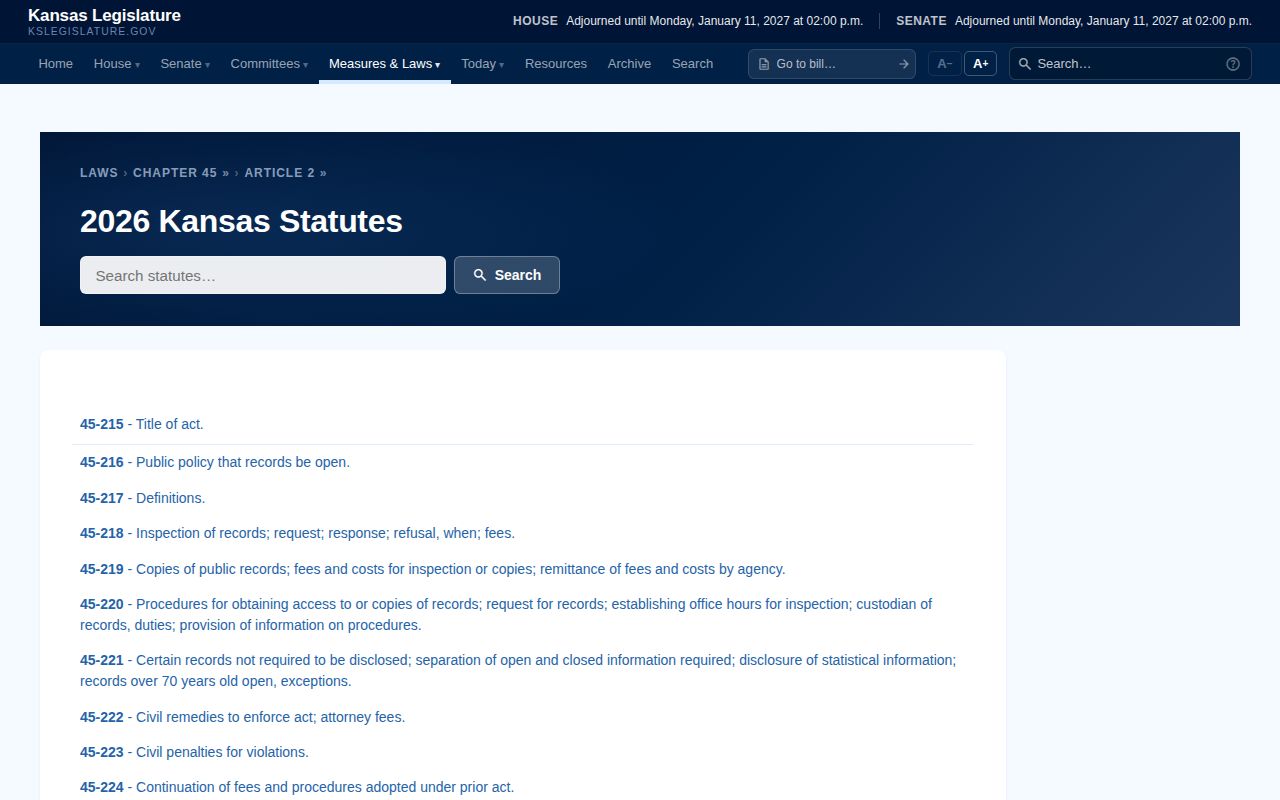
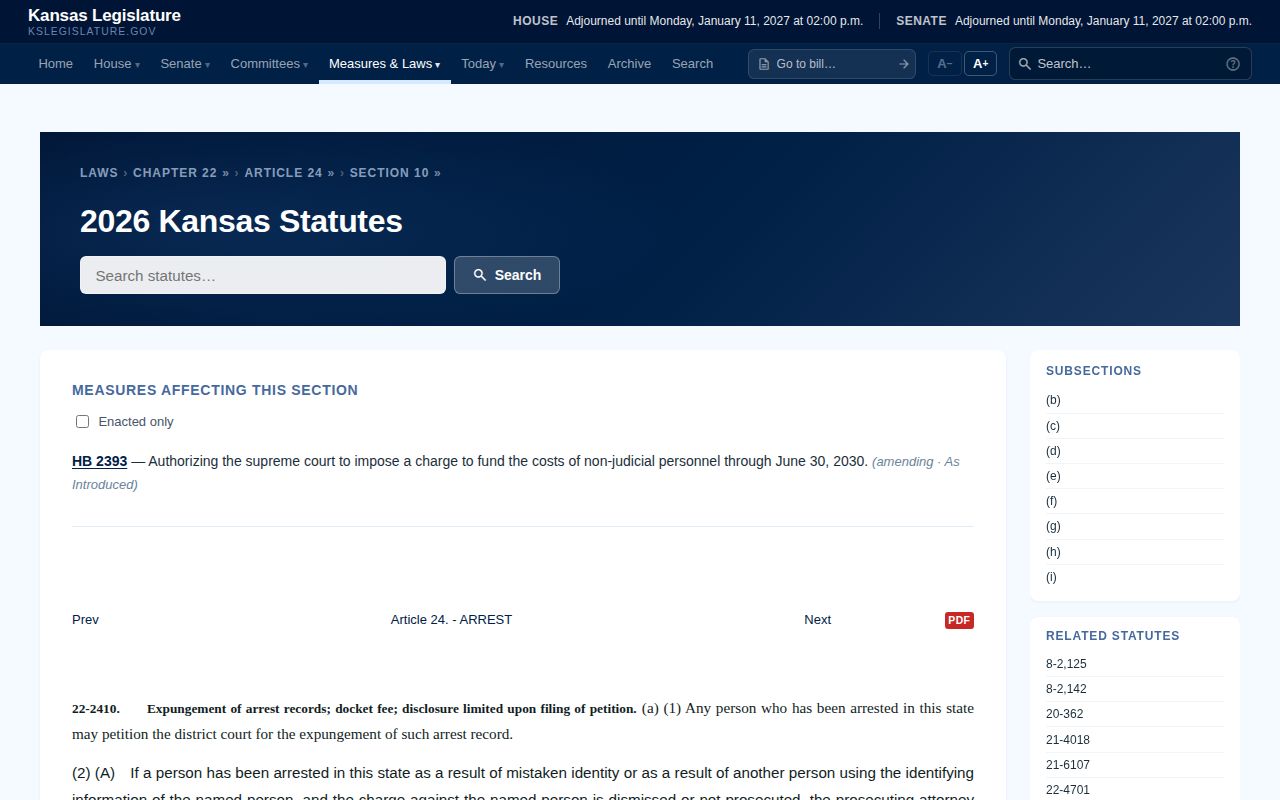
The statute explains a common puzzle. An arrest file can be public while a photo stays withheld or only partly released. Expungement adds another wrinkle. The Kansas arrest-record expungement statute lays out the petition route and the limits on later disclosure.
A court order is one thing. A publisher's correction request is a separate step, and neither can be guessed from an old photograph.
Dennis Rader’s Kansas Record Trail
Dennis Rader's arrest came in February 2005. It happened near Park City in Sedgwick County. He faced ten first-degree murder charges. A guilty plea came that June, followed by ten consecutive life sentences. The FBI Kansas City field-office history walks through the investigation and arrest. A Kansas Supreme Court opinion records the plea and sentence. News coverage still runs the booking photo. It is credited to the Sedgwick County Sheriff, and a contemporary CBS/AP report names that source. No original sheriff file is currently posted online. The real trail runs from the county detention record to the district-court case, then on to appellate and correctional files. Follow news to a lead, but confirm the court outcome and the current record holder.
The Carr Brothers’ Kansas Court Records
Wichita police arrested the Carr brothers in December 2000. The crimes became known as the Wichita massacre. A Sedgwick County jury convicted them of multiple murders and related crimes. Death sentences followed. Kansas appellate review then stretched across many years. That history is why a 2000 booking entry can never stand in for the full court record. The Kansas Supreme Court opinion is the authoritative account of the appeal. Sedgwick County District Court holds where the trail began. No public, currently accessible original booking photo exists, so a syndicated image should not be labeled the sheriff's record.
Scott Roeder’s Kansas Court Record
Police arrested Scott Roeder in Wichita in 2009. The charge followed the shooting death of physician George Tiller. A jury convicted him of first-degree murder and aggravated assault. The Kansas Supreme Court upheld the conviction. It also vacated the “Hard 50” sentencing method. That piece went back for resentencing under the constitutional rule the appeal raised. For an official record, the Sedgwick County District Attorney’s case release is the place to start. The docket itself lives in Sedgwick County District Court. Later appellate filings sit behind it. News outlets have carried booking images, but the county posts no original file, which is why a conviction and a later sentencing ruling belong in separate buckets.
Adam Purinton’s Kansas Case Records
Adam Purinton's case began with a shooting at an Olathe bar in February 2017. Srinivas Kuchibhotla was killed. Two other men were wounded. In Kansas state court, Purinton pleaded guilty to first-degree murder and attempted first-degree murder, and a judge sentenced him to life with a long wait before parole eligibility. The state docket records that result. A federal case ran on a separate track. The U.S. Attorney for Kansas announced hate-crime and firearm charges there. The federal release documents those charges, though it is not a state-court disposition. KSHB's sentencing report covers the state sentence. The paper trail runs through Johnson County and the federal courts, and no original booking photo from any agency appears in it.
John Edward Robinson’s Kansas Court Record
John Edward Robinson was arrested in 2000 after an investigation around La Cygne and Johnson County. Charges included murder and kidnapping, among others. The case ended in convictions and a long sentence, and the appellate decisions lay out that history in full. The Kansas Supreme Court opinion is the primary source for the appellate record. It beats the arrest story for detail. The case began in Johnson County District Court. Later state opinions carry it forward. News archives show arrest photos from the era, but no original booking image from the responsible county agency is available through official channels.
Richard Grissom’s Kansas Case History
Richard Grissom's Kansas case grew out of the disappearances and murders of three Johnson County women. Convictions followed on three counts of first-degree murder. The verdicts also covered aggravated kidnapping, robbery, aggravated burglary, and misdemeanor theft. The arrest record is one dated point. The court's rulings hold the fuller account. State v. Grissom is the primary Kansas Supreme Court disposition source. The trial docket sits in Johnson County District Court. News images circulate, but none qualifies as an official county booking copy.
Terry Nichols’s Kansas and Federal Records
Terry Nichols surrendered to federal authorities in Herington, Kansas, on April 21, 1995. It came during the Oklahoma City bombing investigation. Federal convictions followed, for conspiracy and involuntary manslaughter. The sentence was life. An FBI historical report records those outcomes. That report also holds an image record, which is not a Kansas county booking roster or local jail photo. No original Kansas county booking image is part of this case's public trail. Keep three things separate here: the federal court record, the FBI's own history, and the place of surrender. State correctional archives form another source class entirely.
Look Up Any Kansas Arrest
The same trail works for any ordinary Kansas arrest. Start with the agency that held the person. Then turn to the court docket for charges and case outcomes. The Kansas statewide booking-record overview explains current county sources, and the Historical Mugshots page covers older state correctional collections.
- Identify the county where the arrest or booking occurred, then check that sheriff or jail’s current roster and records route.
- Search the district-court docket for filed charges, hearings, judgments, appeals, and later sentence changes.
- For a state-prison record, use the KDOC system; for a federal case, follow the federal court or agency record path.
- Compare the newest disposition with any photo or news story, and note when the original image source is not confirmed.
A docket may not include a booking photo. An archive may not be indexed by name. Ask the record holder for the exact item you want. The Kansas Judicial Branch district-court records page explains online access and public-terminal options.
The portal helps you find case records. The court file and the booking image stay separate. For older correctional material, the Kansas Historical Society archives index is a starting point for its collections and finding aids.
The archive is a research route. It makes no claim that any case listed above has a digitized booking image.