
Where Historic Kansas Booking Records Remain
Old Kansas booking photos survive in many hands. An agency file, a state correctional collection, a court exhibit, a newspaper archive, or a library reel may each hold one. Each owner plays by different rules. The Kansas Historical Society keeps several state correctional collections. Inmate photographs and related files are described there, which makes KSHS a strong first stop for prison-era research. It is not a full archive of every county arrest or jail intake, though.
County sheriff and jail files follow local retention schedules. A photo may stay with its arrest record, move to another office, or be destroyed under the series rules. A courthouse file can preserve the case and its outcome while the booking image is gone. News archives and private scans are copies, not originals. They can also miss later court outcomes.
For a recent arrest, start with the local roster or records office, or file a KORA request through the County Directory. Older state-prison material appears in KSHS finding aids. A vanished roster or an old image proves nothing about sealing or expungement either way.
Kansas Historical Records Collections
KSHS finding aids describe correctional series by facility and era, which narrows a search fast. The dates show coverage only. No aid promises that every person has a file or that every item is online. Start with the KDOC record group for context.
| Collection | Coverage | What it may contain | Access note |
|---|---|---|---|
| Kansas State Penitentiary records | 1864-1996 | Institutional records and inmate material. | Individual records may be restricted, especially for recent periods. |
| Kansas State Penitentiary inmate files | 1928-1996 | Mugshots, criminal records, and court documents. | The finding aid cites K.S.A. 45-221(a)(29) restrictions. |
| Reception and Diagnostic Center inmate files | 1910-1989 | Inmate files that may include mugshots and fingerprints. | Access can be limited by law. |
| State penitentiary registers | 1897-1985 | Microfilm entries may list photo number, crime, date received, county, and discharge. | Some portions are restricted. |
| Prison ledgers | 1864-1952 | Confinement, conviction, county, physical description, and discharge details. | Restrictions apply to portions. |
Use an inmate number when you have one. A name alone may not pin down a box, reel, or file. Many finding aids are organized by series, not web search. The Kansas State Penitentiary inmate-file finding aid covers one collection. It holds mugshots and related court records.
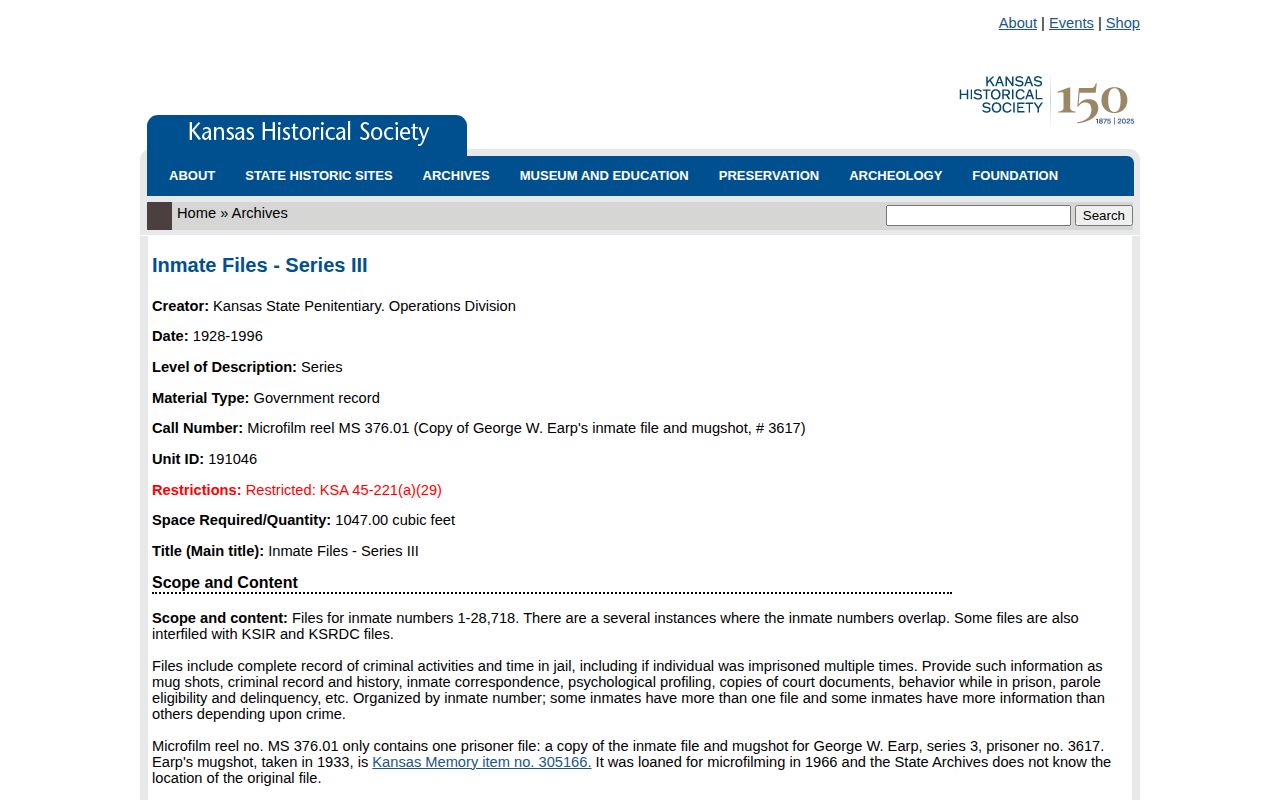
The finding aid names the series. Staff must still confirm whether a particular item is open, indexed, and available as a scan.
Kansas Record Retention Rules
Kansas sheriffs follow a records schedule, and the KSHS county-sheriff retention index spells it out series by series. The timeframes vary a lot. Misdemeanor arrest records may carry a five-year minimum. Felony arrest records can run twenty. Inmate case files often stay five years past incarceration, while temporary out-of-county or ICE holding files can drop off two years after release. Jail reports can last two years beyond release. Some jail and commitment records get permanent or archival status. The local schedule always controls the details, so check the series description before assuming anything.
One caution is worth stating plainly. These rules govern official record series, not what a website shows. A jail roster may refresh daily or clear within days. The agency's underlying booking record still exists on its own schedule. Legal holds, audits, litigation, local policy, and archival transfers can all change what survives. A public site can hold a copy long after the live roster drops it. When a listing vanishes online, that proves nothing about destruction, sealing, or expungement.
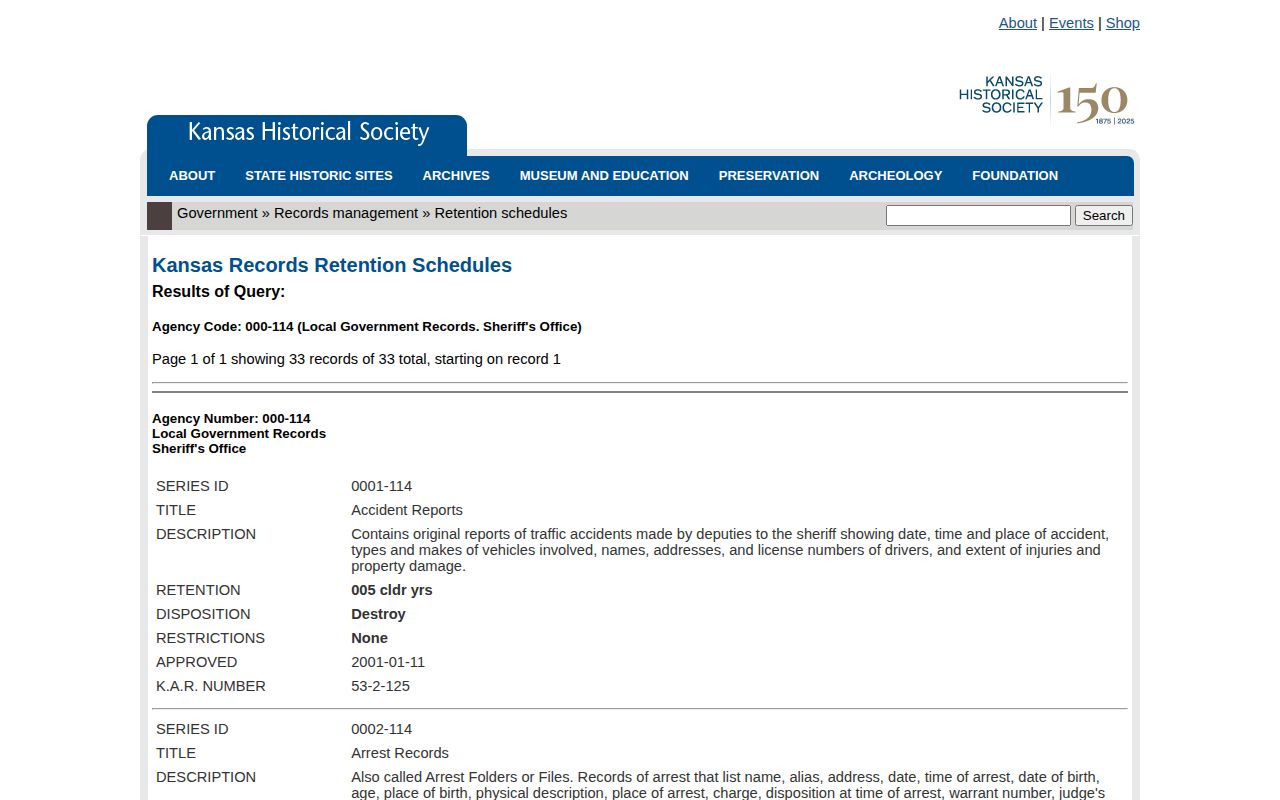
A listed period is no guarantee. Ask the holding agency which series covers the booking image, since rules describe series rather than individual photos.
Kansas Archive Record Restrictions
A finding aid says what a series may hold. It is not a promise of access. The Kansas State Penitentiary inmate-file description cites restrictions under K.S.A. 45-221(a)(29). Reception and Diagnostic Center files face statutory limits too. Some material is not indexed by name. A catalog result can flag the right collection, but staff still decide whether a folder is open, partly restricted, or lacking a digital copy.
Ask the archivist before you plan. A redacted portion, an open description, or a nearby public series may still answer the question. Do not treat an old date as a green light. A person's later status may be unknown. Prison files hold sensitive details beyond the photo. A restricted archival record stays restricted, no matter what image a private page posts.
Old county booking sheets may never have reached a state collection. The sheriff's retention schedule decides which local series survives and where a request belongs. A court archive keeps filings and the final judgment. A sheriff's series may hold the intake sheet or photo. The two files answer different questions. Give each office enough detail to find the specific record, and ask which date range and record type it can search.
The KSHS research page explains its catalog and its archival request routes. For records held by a government custodian, the relevant KORA exception is K.S.A. 45-221. Access still turns on the record itself. The restriction on file decides the outcome.
Request a Kansas Historical Records Search
KSHS offers a research-room visit and an Ask a Research Question route. A remote staff search can cost money and time. Expect a fee, copy charges, postage, and several weeks. Confirm current cost and timing before sending an order. The reference contact is KSHS.reference@ks.gov or (785) 272-8681, extension 117. The address is 6425 SW 6th Avenue, Topeka, Kansas 66615-1099. Ask first whether the material is open and whether a scan already exists.
Keep the request concise. Give staff enough detail to test the right collection. Do not ask them to infer an identity from a photo. List the full name and known aliases. Add the approximate birth date, facility, inmate or KDOC number, county or offense, and a year range. Note if the person sat in a county jail rather than a state prison. KSHS correctional collections are not a statewide index of county bookings.
- Search the KSHS archives and research pages for a likely collection and its date span.
- Send the name, alias, facility, ID number if known, and approximate years through the research-question route.
- Ask whether the file is restricted, whether a redacted record or description is available, and whether a digital copy can be supplied.
- Confirm any staff time, copying, or postage cost and expected wait before authorizing paid research or copies.
The Kansas Historical Society archives page points researchers toward its catalog and request options.
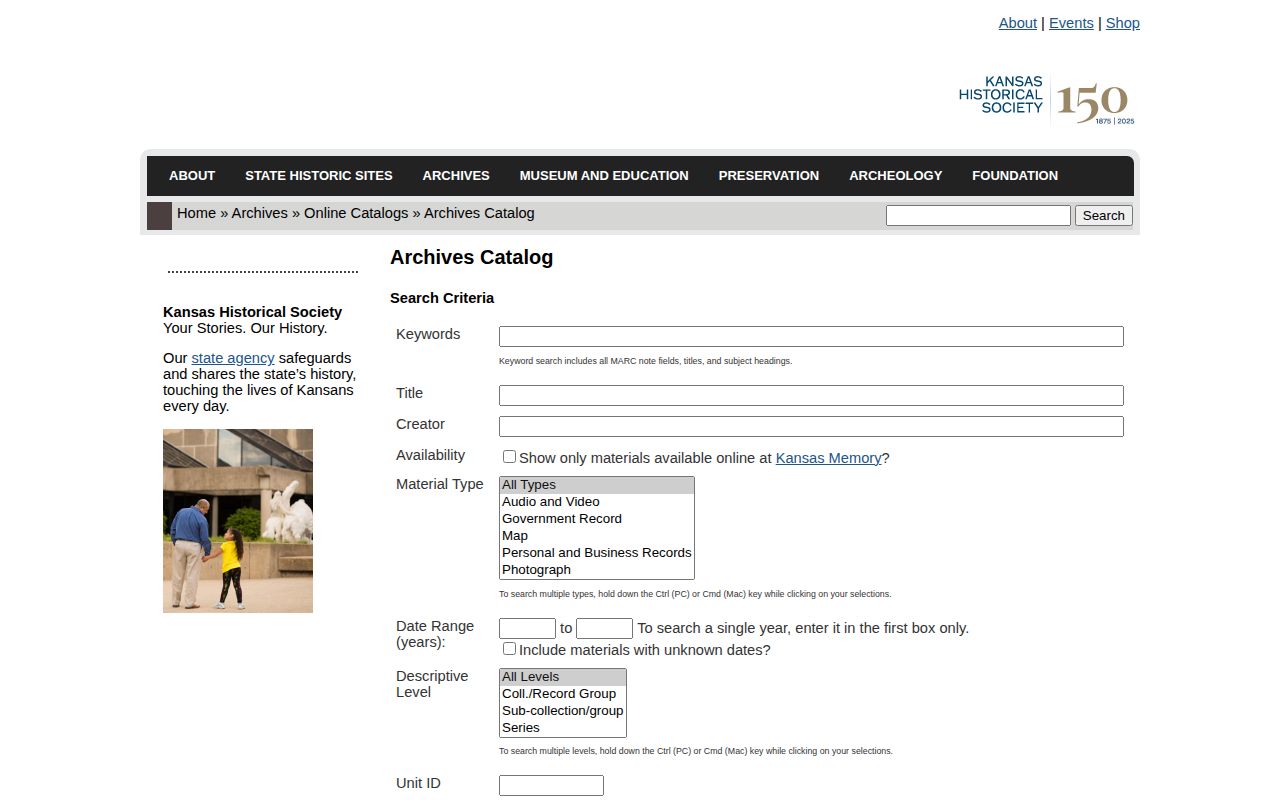
Start with the collection description. Then ask staff to verify access and copy options for the specific file. The Reception and Diagnostic Center inmate-file finding aid names a second correctional collection and its date range.
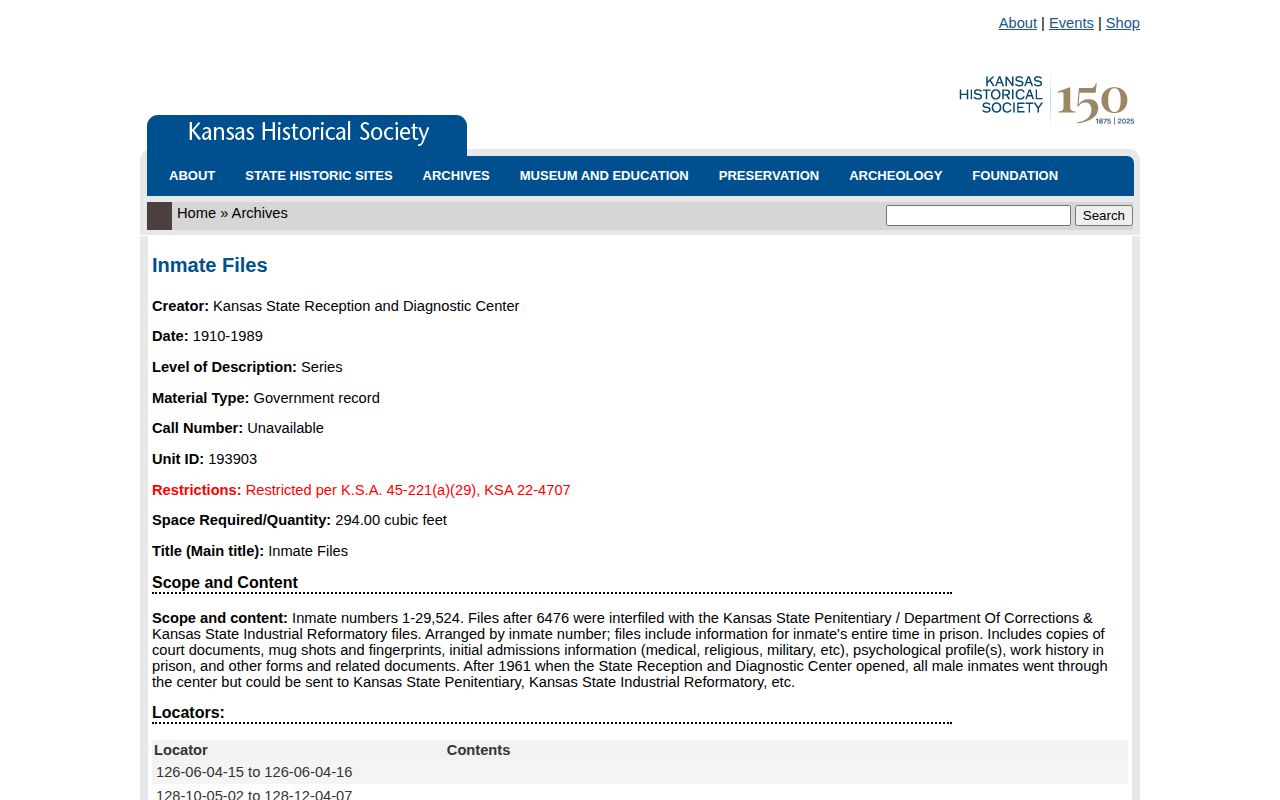
A finding aid is only a guide. It does not promise that an individual's photo is digitized or releasable.
Kansas Booking Record or Historical File?
A recent booking search and an archival search answer different questions. The two rarely overlap. Live county rosters cover active custody. Booking feeds cover recent custody too. Each county sets its own online window. A state archive finding aid works differently, describing older corrections holdings by series and era. A name may appear in a court case, a correctional register, or a newspaper archive even when no booking image survives. For current arrest paths and statewide source limits, see the Kansas booking-record overview.
A penitentiary intake entry marks reception into state custody, not a county sheriff's first booking. The state file may begin later than the arrest. It may hold a conviction or discharge the old jail roster never shows. Dates can diverge too. A state register can preserve a photo number or physical description without the picture itself. Treat each document as its own record. To trace a full timeline, compare the county booking file, the court docket, the correctional entry, and any later appeal.
| Need | Start here | What it can show |
|---|---|---|
| Current county custody | Holding sheriff or jail roster | Current status and whatever booking details or photo the county publishes. |
| Older county arrest file | County records office and retention schedule | Whether a retained record exists and can be inspected or copied. |
| Historic state-prison file | KSHS correctional collection finding aid | Series dates and descriptions, then staff confirmation of access. |
| Court outcome | District-court case file or public terminal | Charges filed, rulings, sentence, appeal, or other recorded disposition. |
Agency schedules change. Catalogs change too. Access rules shift with them. Confirm the current series with the responsible office before ordering any search.
Note: An open series can still hold a partial, redacted, or unavailable record, so confirm copy access before planning around a photograph.